
Multi-State Tax Services for New Jersey Businesses
GTA Accounting Group assists New Jersey residents with complex multi-state tax situations. Our experienced team ensures compliance with all relevant tax laws, helping you avoid penalties and optimize your tax outcomes.
Get in touchUse the form below to
Claim Offer



Understanding New Jersey's Tax Residency Rules
Determining your residency status is crucial for accurate tax filing in New Jersey, especially when dealing with income from multiple states. New Jersey classifies taxpayers into three categories: Resident, Nonresident, and Part-Year Resident.


Resident
You are considered a New Jersey resident for tax purposes if:
- You are domiciled in New Jersey, meaning it's your permanent home.
- You maintain a permanent home in New Jersey and spend more than 183 days in the state during the tax year.
As a resident, you must report all income, regardless of where it's earned.
Nonresident
You are considered a nonresident if:
- You are not domiciled in New Jersey.
- You do not maintain a permanent home in New Jersey.
- You spend 30 days or fewer in New Jersey during the tax year.
Nonresidents are taxed only on income sourced from New Jersey.
Part-Year Resident
If you moved into or out of New Jersey during the tax year, you are a part-year resident. In this case, you must:
- .File a resident return ( Form NJ-1040 ) for the period you lived in New Jersey, reporting all income earned.
- File a nonresident return ( Form NJ-1040NR ) for any New Jersey-sourced income earned while you were a nonresident.
Understanding these classifications helps ensure compliance and accurate tax reporting.
Unsure about your residency status? GTA Accounting Group can help clarify your classification and ensure accurate filings.
Partners






Google Reviews
Client Success Stories

Small Business, Amin

International Taxes, Bhagat

Importing / Exporting, Cody

Solo Entrepreneur , Dylan

Independent Contractor, Hassan

Restaurant Business - Igor

ECommerce Business - Jamy

Self Employed - John

Small Business Owner - Joony

Real Estate Investor - Khalid

Small Business Owner - Mani

Personal / U.S. Taxes - Mike

Real Estate Agent - Natalie
Reciprocal Agreements and Tax Credits
Understanding how New Jersey interacts with neighbouring states regarding income taxation is essential for residents earning income across state lines.
Reciprocal Agreements
New Jersey has a reciprocal personal income tax agreement with Pennsylvania. This agreement stipulates that
- New Jersey residents working in Pennsylvania are not subject to Pennsylvania income tax on their wages.
- Pennsylvania residents working in New Jersey are not subject to New Jersey income tax on their wages.
This agreement applies strictly to earned income such as salaries and wages. Other types of income, like self-employment earnings or rental income, are not covered and may be taxed by both states.
To benefit from this agreement, New Jersey residents employed in Pennsylvania should complete and submit Form NJ-165 to their Pennsylvania employer to ensure proper withholding.
Tax Credits for Taxes Paid to Other Jurisdictions
For income not covered by reciprocal agreements, New Jersey residents may be eligible for a credit to offset taxes paid to other states. Key points include:
- The credit is available for income taxed by New Jersey and another jurisdiction in the same tax year.
- The credit amount is the lesser of the tax paid to the other jurisdiction or the amount of New Jersey tax attributable to the same income.
- To claim the credit, taxpayers must complete Schedule NJ-COJ and include it with their New Jersey tax return.
It's important to note that this credit does not apply to municipal taxes, such as the Philadelphia Wage Tax. However, New Jersey residents can still claim a credit for such municipal taxes paid.
Concerned about double taxation? GTA Accounting Group can help you navigate reciprocal agreements and tax credits to ensure you're not overpaying.
Filing Requirements and Deadlines
Understanding each state's specific filing requirements and deadlines is crucial when dealing with multi-state tax situations. For New Jersey residents earning income in other states, this often means preparing multiple tax returns to ensure compliance and avoid penalties.

New Jersey Resident Return (Form NJ-1040):
- Who Must File: If their gross income exceeds the state's filing threshold, all New Jersey residents must file Form NJ-1040.
- Income to Report: Report all income earned during New Jersey residency, regardless of the source.
New Jersey Nonresident Return (Form NJ-1040NR):
- Who Must File: If you earned income from New Jersey sources while not a resident, you must file Form NJ-1040NR.
- Income to Report: Report only the revenue earned from New Jersey sources during the nonresident period.
Other State Returns:
- Nonresident Returns: If you earned income in another state, you may need to file a nonresident return for that state, reporting only the income earned there.
- Part-Year Resident Returns: If you moved into or out of another state during the tax year, you may need to file a part-year resident return for that state.
Deadlines
- New Jersey Returns: Your return for calendar-year filers is due by April 15, 2025. If you operate on a fiscal year, your return is due by the 15th day of the fourth month following the end of your fiscal year.
- Other States: Deadlines vary by state. Check each state's tax authority website for specific due dates to ensure timely filing.
Managing multiple tax filings can be complex. GTA Accounting Group is here to simplify the process and ensure all your returns are filed accurately and on time.
Common Pitfalls in Multi-State Tax Filings
Filing taxes across multiple states can be complex; even small mistakes can lead to significant issues. Understanding common pitfalls can help avoid errors that may result in penalties or audits.

Misclassifying Residency Status
Incorrectly identifying your residency status can lead to filing the wrong forms or misreporting income. For example, if you moved to New Jersey during the year but continued to pay taxes as a nonresident, you might miss out on certain deductions or credits.
Incorrect Allocation of Income
When earning income in multiple states, it's crucial to allocate income accurately. Failing to do so can result in overpaying or underpaying taxes. For instance, if you worked remotely from New Jersey for a New York-based employer, you must determine how much taxable income in each state.
Overlooking Reciprocal Agreements
Some states have reciprocal tax agreements that allow residents to pay taxes only in their home state. Not understanding these agreements can lead to unnecessary tax payments. For example, New Jersey has a reciprocal agreement with Pennsylvania, meaning New Jersey residents working in Pennsylvania should only pay New Jersey taxes on their wages.
Failing to Claim Tax Credits
If you pay taxes to another state, you may be eligible for a credit on your New Jersey return to avoid double taxation. Not claiming this credit can result in overpayment. You must file Schedule NJ-COJ with your New Jersey tax return to claim this credit.
Missing Deadlines
Each state has its tax filing deadlines. Missing these deadlines can lead to penalties and interest charges. Keeping track of all relevant deadlines is essential to ensure timely filing.
Avoid costly mistakes in your multi-state tax filings. GTA Accounting Group is here to guide you through the process and ensure accurate, timely submissions.
Case Studies: Success Stories
Understanding real-life scenarios can clarify how multi-state tax situations are managed effectively. Here are two examples illustrating how GTA Accounting Group has assisted clients in navigating complex tax obligations:
Case Study 1: New Jersey Resident Working in Pennsylvania
Background: A New Jersey resident was employed in Pennsylvania and had Pennsylvania state taxes withheld from their paycheck.
Challenge: Due to the reciprocal agreement between New Jersey and Pennsylvania, the residents should not have been subject to Pennsylvania income tax on their wages. However, the employer continued to withhold Pennsylvania taxes.
Solution: GTA Accounting Group guided the client in completing and submitting the necessary exemption form to their employer to cease future Pennsylvania tax withholding. We also assisted in filing a Pennsylvania nonresident return to claim a refund for the erroneously withheld taxes.
Outcome: The client received a full refund of the improperly withheld Pennsylvania taxes and ensured correct withholding.
Case Study 2: New Jersey Resident with Rental Property in New York
Background: A New Jersey resident owned a rental property in New York, generating rental income subject to New York state tax .
Challenge: The client was concerned about potential double taxation, paying taxes on the same income to New York and New Jersey.
Solution: GTA Accounting Group prepared a New York nonresident tax return to report the rental income and calculate the tax due. We then completed the New Jersey resident return, including Schedule NJ-COJ, to claim a credit for the taxes paid to New York.
Outcome: The client successfully avoided double taxation by claiming the appropriate credit on their New Jersey return, ensuring compliance with both states' tax laws.
Facing complex multi-state tax situations? GTA Accounting Group has the expertise to guide you through and optimize your tax outcomes.
Get in touch
Where We Meet Clients
101 Hudson Street, Jersey City, New Jersey 07302

972 Broad St, Newark, New Jersey 07102
100 Overlook Centre Princeton, New Jersey 08540
Office -Atlantic, NJ
How GTA Accounting Group Can Assist
Managing multi-state tax obligations can be complex, but GTA Accounting Group can simplify the process. Our team of experienced professionals offers comprehensive services tailored to your unique situation, ensuring compliance and optimizing your tax outcomes.
Our commitment is to provide personalized service that addresses the intricacies of your multi-state tax situation.

Our Services Include:
- Residency Status Determination : We help you accurately determine your residency status, which is crucial for proper tax filing.
- Income Allocation : Our experts assist in correctly allocating income across different states, minimizing the risk of overpayment or underpayment of taxes.
- Tax Credit Optimization : To prevent double taxation, we ensure you claim all eligible credits, such as those for taxes paid to other jurisdictions.
- Filing Compliance : GTA Accounting Group manages the preparation and timely filing of all necessary state tax returns, keeping you compliant with varying state laws.
- Strategic Tax Planning : We provide proactive strategies to align with your financial goals and reduce future tax liabilities.
Ready to simplify your multi-state tax filings? Contact GTA Accounting Group today for expert assistance tailored to your needs.
Make Multi-State Filing Simple, Accurate, and Stress-Free

Filing taxes in multiple states can feel overwhelming—but it doesn’t have to be. Whether you're a New Jersey resident commuting to New York, running a business that operates in several states, or earning rental income across state lines, your tax situation deserves careful attention and professional support.
At GTA Accounting Group, we help individuals and businesses like you file confidently and correctly—every time. From avoiding double taxation to claiming every credit you’re entitled to, we ensure nothing is missed, and everything is filed on time.
Don’t risk costly mistakes, penalties, or missed savings.
Frequently Asked Questions
Yes. As a New Jersey resident, you must file a New Jersey resident tax return (Form NJ-1040) and report all income earned, regardless of where it's sourced. If you paid income tax to another state, you might be eligible for a credit on your New Jersey return to avoid double taxation.
If you changed your residency status during the year, you must file a part-year resident return (Form NJ-1040) for the period you lived in New Jersey. Additionally, you may need to file a nonresident return (Form NJ-1040NR) for any New Jersey-sourced income earned while you were a nonresident.
New Jersey offers a credit for income taxes paid to other jurisdictions. To claim this credit, complete Schedule NJ-COJ and include it with your New Jersey tax return. This helps offset taxes paid to other states on income also taxed by New Jersey.
Yes. New Jersey has a reciprocal agreement with Pennsylvania. Under this agreement, New Jersey residents working in Pennsylvania are exempt from Pennsylvania income tax on wages and vice versa. To benefit, submit Form NJ-165 to your Pennsylvania employer.
The New Jersey income tax return for calendar year filers is due by April 15, 2025. If you're a fiscal year filer, your return is due by the 15th day of the fourth month following the end of your fiscal year.
Yes. New Jersey offers electronic filing options through the Federal-State Modernized e-File (MeF) program and NJ Online Filing. These platforms provide benefits like faster processing and reduced errors.
If you earned income in multiple states, you may need to file separate state tax returns, depending on each state's requirements. Generally, you'll file a nonresident return in the state where you earned income and a resident return in your home state, claiming any applicable credits to avoid double taxation. Have more questions about multi-state tax filings? Contact GTA Accounting Group today for personalized assistance.
Tax & Accounting Insights by GTA Accounting
February 12, 2026
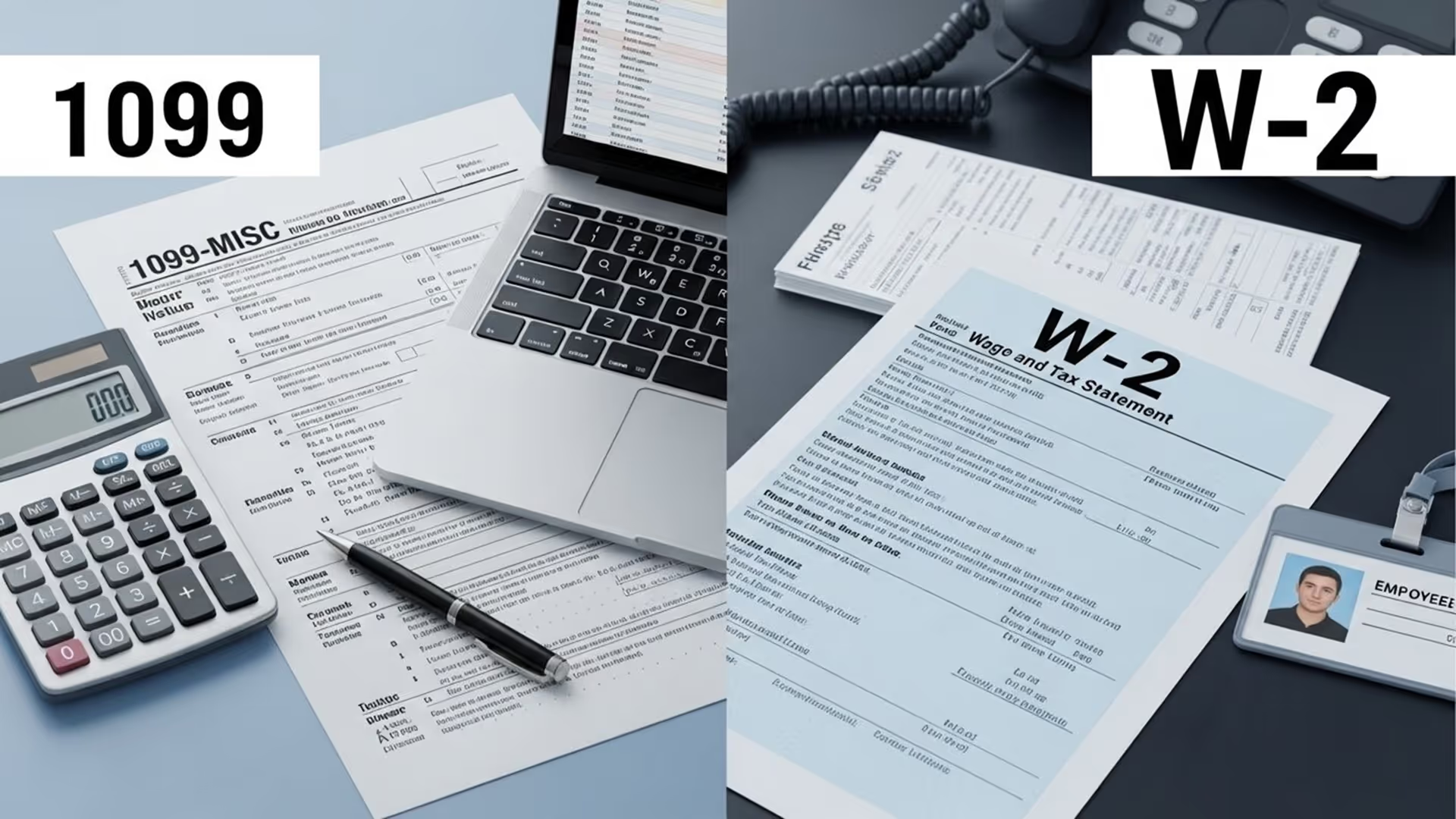
1099 vs W-2: What Business Owners Must Know Before Tax Season (2026 Guide)
Are you misclassifying your team? Learn the critical differences between 1099 and W-2 workers, IRS rules for 2026, and how to avoid costly penalties in NY & CA.
Read more →
January 7, 2025
10 Common Tax Deductions for New York Businesses
This blog highlights New York businesses' ten most common tax deductions, providing insights into their eligibility requirements and actionable tips for maximizing savings.
Read more →
May 25, 2026
2026 Federal Tax Brackets: IRS Income Tax Rates & Standard Deduction
The 2026 U.S. tax brackets keep the same rates but adjust income limits for inflation, with updated standard deductions of $15,750 (single) and $31,500 (joint). You’re only taxed progressively by bracket, and deductions or credits can lower your taxable income and total tax.
Read more →