
Capital Gains Tax Services in New Jersey
New Jersey has no separate capital gains tax. Gains are taxed as part of your New Jersey income at rates from 1.4% to 10.75%, and the state does not differentiate between short-term and long-term capital gains. If you sold your primary residence, you may qualify to exclude up to $250,000 of the gain, or $500,000 if you file jointly, regardless of age.
Capital gains tax applies when you sell an asset like property, stocks, or business equipment for more than you paid. In New Jersey, both residents and non-residents may face capital gains tax depending on the asset and situation. At GTA Accounting Group, we assist individuals and businesses in reporting capital gains properly, calculating liability, and filing with both NJ and federal tax authorities. If you’ve sold property, received gains from stocks, or inherited high-value assets, we help ensure compliance and accuracy.
Get in touchUse the form below to
CLAIM OFFER



Capital Gains Tax Services in New Jersey
Capital Gains Tax Filing Services in New Jersey

Capital Gains Tax on Home Sales
Capital Gains Tax on Investment Property
Capital Gains Tax on Stocks and Securities
Capital Gains Tax on Inherited Property
Capital Gains Tax for Non-Residents Selling in NJ
Partners






Google Reviews
Client Success Stories

Small Business, Amin

International Taxes, Bhagat

Importing / Exporting, Cody

Solo Entrepreneur , Dylan

Independent Contractor, Hassan

Restaurant Business - Igor

ECommerce Business - Jamy

Self Employed - John

Small Business Owner - Joony

Real Estate Investor - Khalid

Small Business Owner - Mani

Personal / U.S. Taxes - Mike

Real Estate Agent - Natalie
What We Do at GTA Accounting Group

Who Needs Capital Gains Tax Services in NJ
When to Contact a Professional Accountant for Capital Gains
New Jersey Capital Gains Tax Rates and Brackets
New Jersey does not have a separate capital gains tax rate. Instead, capital gains are taxed as part of your regular state income. This means that your gains are added to your total income and taxed under NJ's graduated income tax brackets. As of 2025, NJ tax rates range from 1.4% to 10.75% depending on your income. Short-term and long-term gains are treated the same under NJ tax law, unlike federal rules which offer reduced rates for long-term gains.
Get in touchCapital Gains Tax Exemptions and Exclusions

Primary Residence Exemption Rules
Capital Gains Tax Exemptions on Sale of Home
IRS Section 121 Exclusion (Up to $500,000)
Capital Gains Exemptions for Trusts and Estates
Capital Gains Tax Strategy and Planning

How to Reduce or Avoid Capital Gains Tax in NJ
1031 Exchange for Investment Property
Using Capital Losses to Offset Gains
Long-Term Holding Strategies for Tax Savings
Where We Provide Capital Gains Tax Services in New Jersey

Professional Accountant in Atlantic City
Licensed Accountant in Trenton
Business Tax Services in Princeton
Accounting Experts in Newark
Professional Accounting Services in Other Areas of New Jersey
Why Choose GTA Accounting Group for Capital Gains Tax Services
GTA Accounting Group has years of experience handling capital gains taxes for NJ residents, investors, and small business owners. We prepare accurate filings, respond to NJ and IRS tax notices, and apply every possible exemption or deferral. Whether you need planning before a sale or help correcting a previous return, our experienced tax professionals ensure full compliance with minimal risk.

We understand depreciation recapture, stepped-up basis, and NJ real estate gain reporting requirements.
We help reduce tax liability through forward planning, exemptions, and IRS-compliant strategies.
Local knowledge of NJ tax code with support for audits, notices, and amended returns.
We file both state and federal returns correctly and on time to avoid penalties or interest.
Manage Your Capital Gains Taxes Expertly

Managing capital gains tax in New Jersey can be complex, but you don’t have to navigate it alone. At GTA Accounting Group, we’re committed to providing personalised, expert guidance tailored to your unique financial situation.
Ready to manage your capital gains tax obligations? Contact GTA Accounting Group today to schedule a consultation. Our team is here to assist you every step of the way.
Let us help you navigate the complexities of capital gains tax and confidently achieve your financial goals.
Frequently Asked Questions about NJ Capital Gains Tax
Understanding capital gains tax in New Jersey can be a complex process. Here are answers to some common questions to help clarify key aspects:
Get in touchYes. If you are a New Jersey resident, all of your capital gains are subject to New Jersey income tax, except gains from the sale of exempt obligations such as US Treasury bonds.
New Jersey has no separate capital gains rate. Gains are taxed at the standard New Jersey income tax rates, which range from 1.4% to 10.75% depending on your total income and filing status.
No. New Jersey does not differentiate between short-term and long-term capital gains. Both are taxed the same way, unlike the federal rules that apply lower rates to long-term gains.
If you sold your primary residence, you may qualify to exclude up to $250,000 of the gain, or $500,000 if you file jointly, as long as you owned and lived in the home for two of the five years before the sale.
There is no age exemption. New Jersey applies the primary-residence exclusion regardless of age, provided you owned and lived in the home for two of the five years before the sale.
Capital gains and losses must be reported in the year they are realized. Losses can offset gains within the same category of income in the year they occur.
You must file a New Jersey non-resident return and report the gain. GTA Accounting Group can assist with that.
Tax & Accounting Insights by GTA Accounting
February 12, 2026
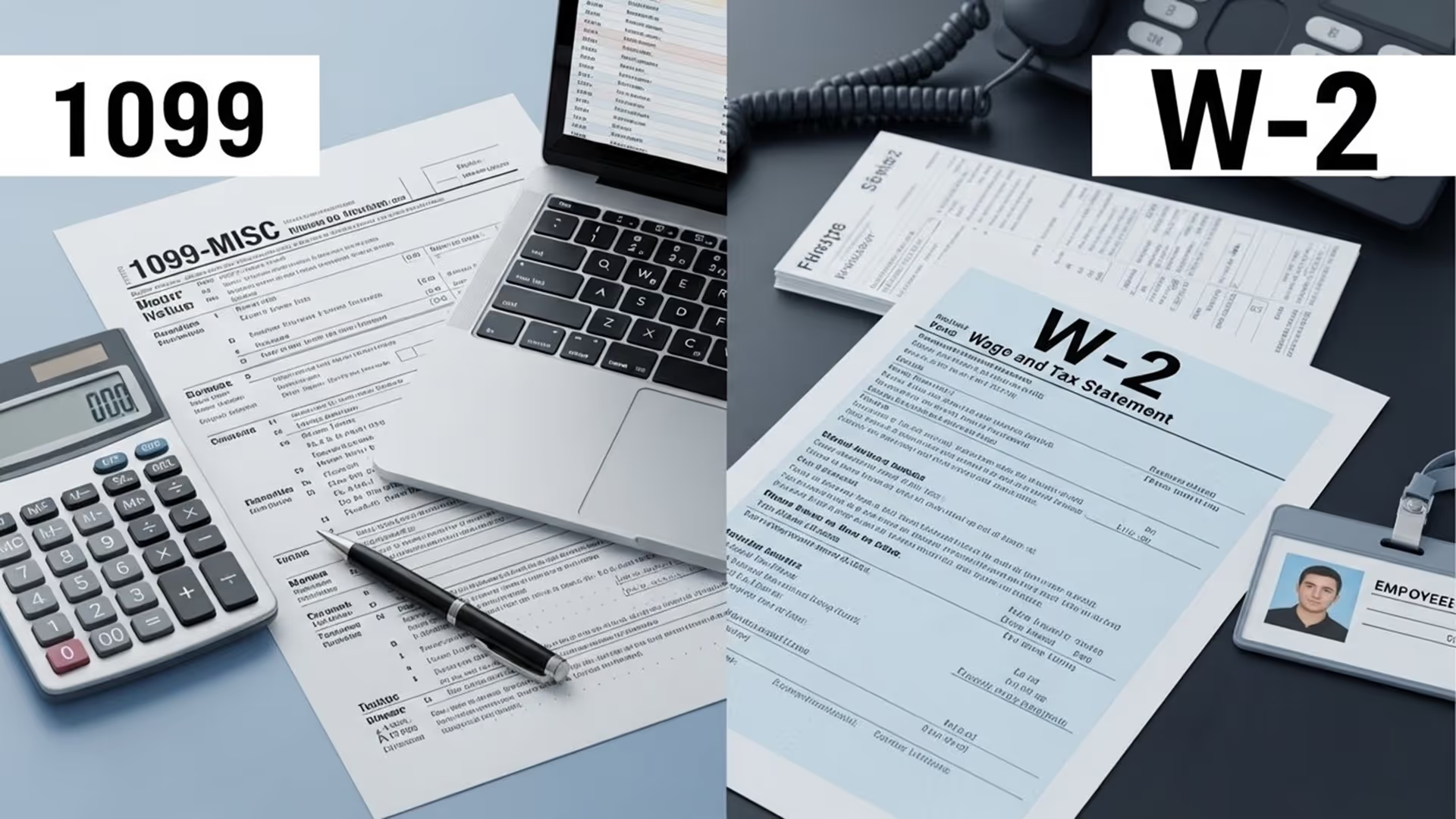
1099 vs W-2: What Business Owners Must Know Before Tax Season (2026 Guide)
Are you misclassifying your team? Learn the critical differences between 1099 and W-2 workers, IRS rules for 2026, and how to avoid costly penalties in NY & CA.
Read more →
January 7, 2025
10 Common Tax Deductions for New York Businesses
This blog highlights New York businesses' ten most common tax deductions, providing insights into their eligibility requirements and actionable tips for maximizing savings.
Read more →
May 25, 2026
2026 Federal Tax Brackets: IRS Income Tax Rates & Standard Deduction
The 2026 U.S. tax brackets keep the same rates but adjust income limits for inflation, with updated standard deductions of $15,750 (single) and $31,500 (joint). You’re only taxed progressively by bracket, and deductions or credits can lower your taxable income and total tax.
Read more →